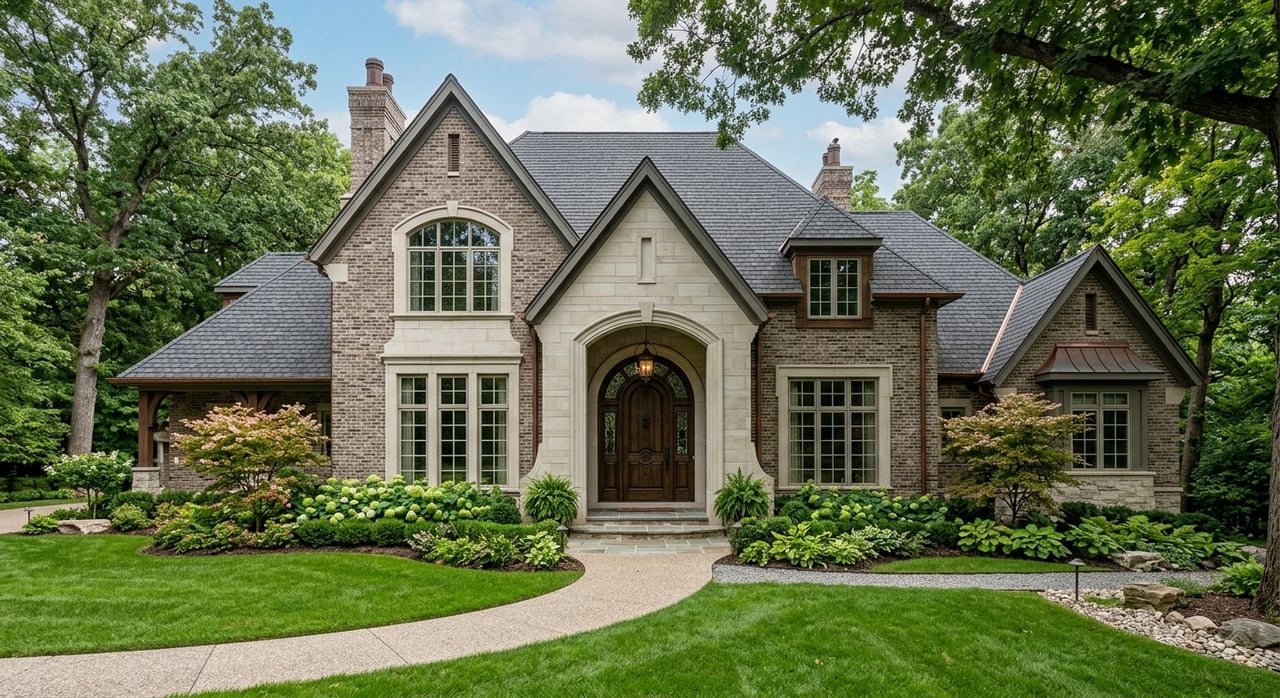
If you are looking for a neighborhood that feels carefully shaped rather than randomly built, Nichols Hills stands out right away. From curving streets and mature landscaping to compact shopping areas and a long-standing focus on design, this community offers a distinct living experience in the Oklahoma City area. Whether you are thinking about buying, selling, or simply learning the area, this guide will walk you through what makes Nichols Hills unique. Let’s dive in.
What Defines Nichols Hills Living
Nichols Hills is a small, mostly residential city surrounded on three sides by Oklahoma City and bordered by The Village to the north. Its original development in the 1920s and 1930s was shaped by G. A. Nichols and the landscape architecture firm Hare & Hare.
Instead of following a standard grid, the plan worked with the natural terrain. That decision helped create wide curving streets, larger lots, and a layout where parks and recreation were built into the neighborhood from the start.
That early planning still shapes the feel of the city today. Nichols Hills reads as a community where landscape, architecture, and everyday convenience were meant to work together.
Parks Are Part of Daily Life
One of the clearest features of Nichols Hills is its park system. City materials say there are 31 landscaped parks, maintained in partnership with Nichols Hills Parks, Inc.
These spaces include walkways, benches, gazebos, fountains, sculptures, native plantings, and ADA improvements. Parks are open to the public from sunrise until 10 p.m., and permits are required for private social activities with 20 or more people.
For buyers, that park network can be a big part of daily lifestyle. For sellers, it helps explain why Nichols Hills often feels more connected, walkable, and visually consistent than many nearby areas.
Notable Parks to Know
A few parks come up often when people talk about Nichols Hills:
- Kite Park hosts summer band performances at its gazebo and serves as the starting point for the annual 4th of July parade.
- G. A. Nichols Park sits at Avondale and Sherwood and is ADA-connected to Nichols Hills Plaza.
- Margaret Haskell Davis Park is located at Larchmont and Avondale and includes a children’s playground.
- Woods Park is on Grand Boulevard and ties into the Grand Blvd Trail.
Each park adds a slightly different function, from events to play space to casual walking routes. Together, they reinforce the idea that outdoor spaces are not an afterthought here.
Trails and Walking Routes
Nichols Hills also offers built-in options for getting outside without leaving the city. The city’s ADA plan says the Grand Blvd Trail is about 4,800 feet long, with an ongoing project to connect both sides of NW Grand Boulevard.
The city also highlights an “A Walk in the Parks” app, a guided 5.45-mile walk featuring 17 points of interest across the park system. That route includes additional ADA-accessible trails in Grand Boulevard Park.
If you value neighborhoods where you can enjoy a walk, sit in a landscaped green space, or move between parks and nearby destinations, this is a meaningful part of Nichols Hills living.
Shopping in Compact Districts
Nichols Hills does not follow the typical pattern of long commercial strips running through every part of town. According to the city’s resident packet, retail and dining are concentrated into two main districts.
The first is Nichols Hills Plaza, split north and south of Avondale Drive just west of City Hall. The second is the district on property bordered by Western, Ollie, and Wilshire, centered on Wilshire Village and a nearby strip of shops.
That compact pattern matters because it supports convenience without making the city feel overbuilt. You get access to daily needs, dining, and small retail clusters while the residential character stays front and center.
What the Retail Pattern Feels Like
Local business listings help show how these districts function in real life. Trader Joe’s at 6409 Avondale describes itself as a neighborhood grocery store, Saturn Grill identifies its location in Nichols Hills Plaza within the Western Avenue district, and The Hutch at 6437 Avondale presents itself as dining in Nichols Hills.
Rather than one large mall-style corridor, the area’s retail is organized into smaller, accessible nodes. The city’s sustainability plan also points to a pedestrian crossing across NW 63rd Street to improve access to shopping and dining around Nichols Hills Plaza.
For many buyers, that creates a nice middle ground. You can enjoy nearby conveniences without losing the quieter residential setting that defines the community.
Architecture Shapes the Identity
Nichols Hills is especially notable for how its homes and landscape were planned together. Historical survey materials say the development followed the contours of the land, included more than 40,000 planted trees, and incorporated features such as parks, golf courses, tennis courts, horse-riding paths, and even a polo field.
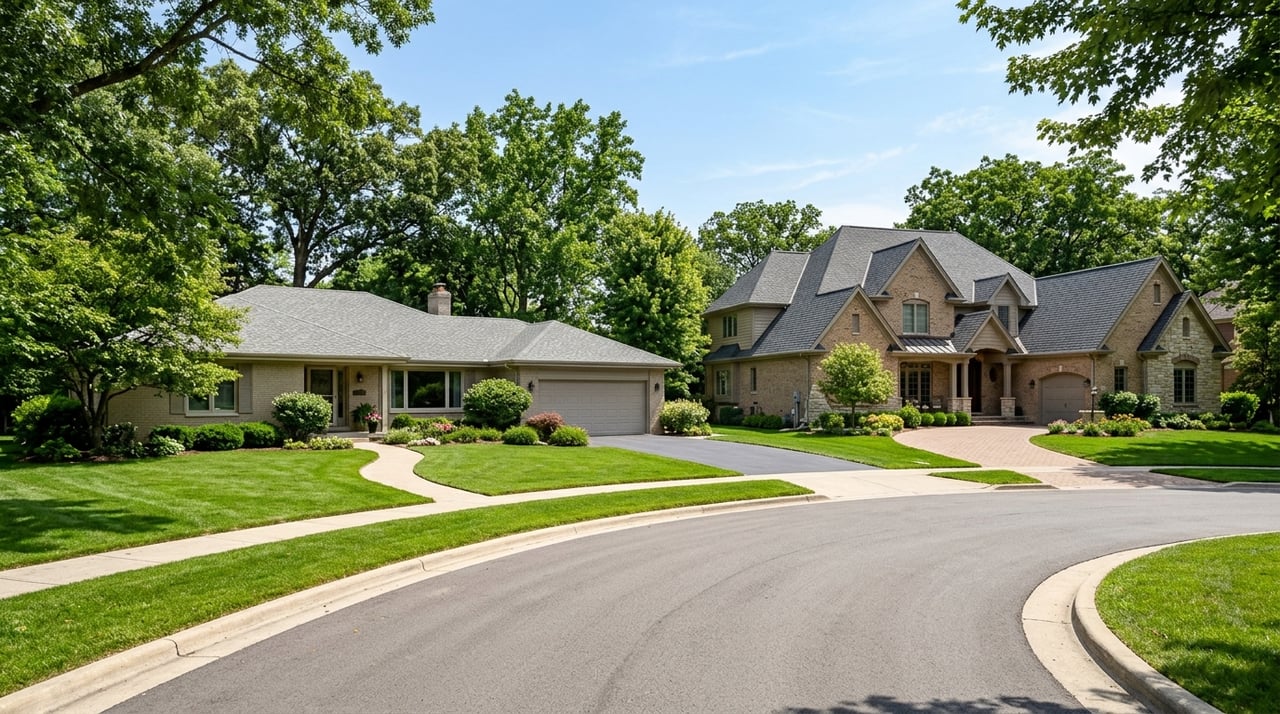
That larger vision still shows up in how the city feels today. Streets curve with the terrain, homes often sit on generously scaled lots, and mature landscaping remains a visible part of the setting.
This is not just a place with attractive homes. It is a place where the overall composition of streets, trees, parks, and buildings helps create a strong sense of identity.
Preservation and Design Review
The city also has a formal design-review framework through its Building Commission. According to city and historical materials, that review addresses demolition, new construction, additions, style, materials, scale, privacy, and landscaping.
A stated goal of that process is protecting and restoring architectural resources when possible. For homeowners, that can be an important part of understanding how change happens in Nichols Hills.
If you are buying here, design standards may shape what future updates look like around you. If you are selling, that same emphasis on character and presentation can support the area’s long-term appeal.
A Concrete Example of Historic Design
One example often cited is the Frank and Merle Buttram House & Grounds at 7316 Nichols Rd. The National Register record identifies it as a 1938 Beaux Arts home designed by Robert Ayers.
Historical sources also note that G. A. Nichols wanted a formal entry at NW 63rd and Western, using Norman-style towers and curving roads intended to slow traffic and frame the experience of moving through the neighborhood. That detail says a lot about the original vision.
Nichols Hills was designed to be seen, experienced, and preserved as more than a collection of lots. That idea still helps explain why the city feels different from surrounding areas.
What Buyers Often Appreciate
For buyers, Nichols Hills offers a mix that can be hard to find in one place. You have a mostly residential setting, a strong park system, retail concentrated into practical nodes, and an architectural identity that feels intentional.
The result is a neighborhood experience that often appeals to people who care about setting as much as square footage. Streetscape, lot layout, greenery, and proximity to daily conveniences all play a role.
If those factors matter to you, Nichols Hills is worth viewing in person. The details of the landscape and street pattern are easier to understand once you spend time driving and walking the area.
What Sellers Can Highlight
If you are preparing to sell a home in Nichols Hills, the lifestyle story matters. Buyers are not only comparing bedrooms and finishes. They are also comparing how a neighborhood feels and functions.
In Nichols Hills, that story includes planned parks, established landscaping, concentrated shopping and dining, and a city-level focus on design review and architectural character. Those points can help frame your home within the broader appeal of the area.
This is where strong local positioning becomes important. A thoughtful marketing approach can connect your property to the neighborhood features buyers are already searching for.
Why Local Guidance Matters
Nichols Hills has a distinct identity, and that means local context matters when you are making a move. Buyers may want help understanding how the park system, retail districts, and design-review culture shape day-to-day living. Sellers may need a strategy that presents their home within the neighborhood’s established character.
That is where a hands-on, neighborhood-savvy real estate team can make a difference. Clear communication, strong positioning, and responsive support matter at every price point.
If you are considering a move in Nichols Hills or anywhere in the OKC metro, The Ambassador Group Real Estate offers full-service guidance with the kind of attentive, high-touch support that helps you move forward with confidence.
FAQs
What is Nichols Hills known for in Oklahoma?
- Nichols Hills is known for its curving streets, large lots, planned parks, concentrated retail districts, and architecture that was designed in harmony with the landscape.
How many parks are in Nichols Hills?
- City materials say Nichols Hills has 31 landscaped parks, with features like walkways, benches, gazebos, fountains, sculptures, native plantings, and ADA improvements.
Where can you shop in Nichols Hills?
- The city identifies two main retail districts: Nichols Hills Plaza near Avondale and City Hall, and a second district near Western, Ollie, and Wilshire centered on Wilshire Village.
Are there walking trails in Nichols Hills?
- Yes. The city says the Grand Blvd Trail is about 4,800 feet long, and the “A Walk in the Parks” route is a guided 5.45-mile walk featuring 17 park highlights.
Why does Nichols Hills architecture look so distinct?
- Historical sources show the city was planned to follow the natural terrain, with landscape and architecture designed together, and the city still uses design review to guide changes to homes and sites today.