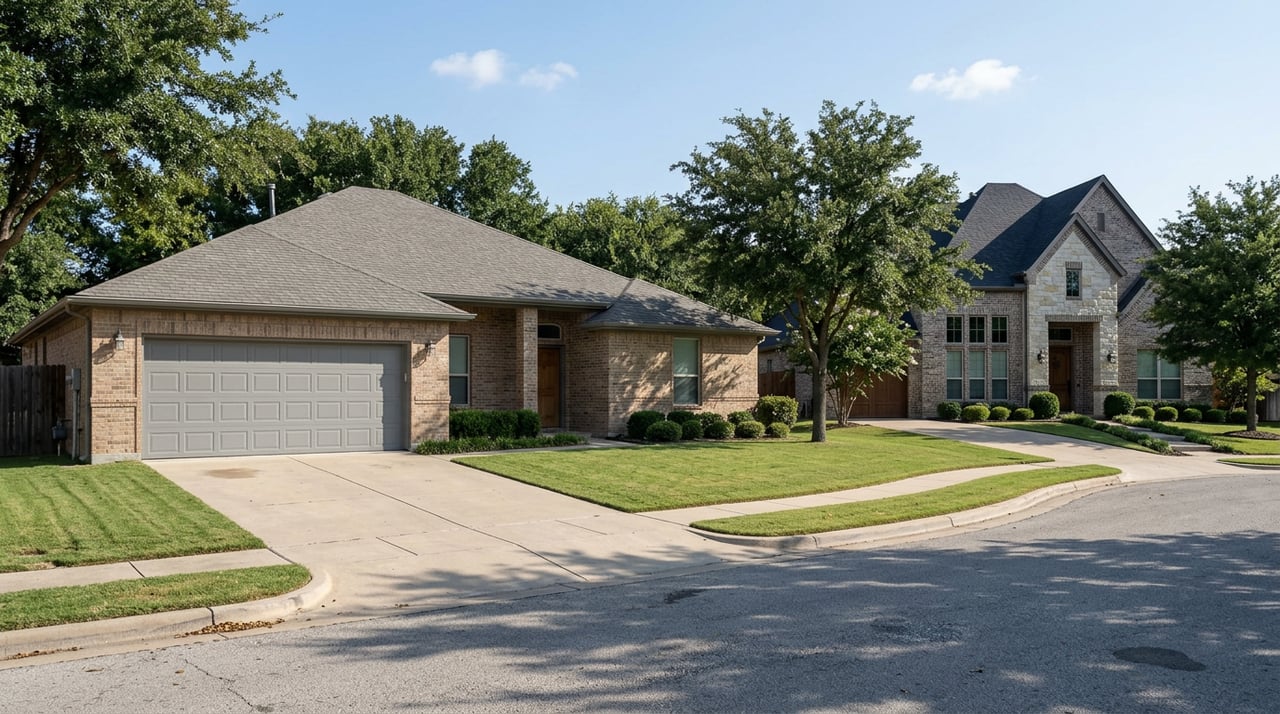
Two listings go up on the same day, both tagged Yukon, Oklahoma. One is a three-bedroom production home on a standard lot, priced in the low $300s. The other sits behind a gate on a half-acre homesite, priced north of $650,000. Same city name. Same zip code region. A buyer scrolling past both could reasonably assume they're looking at two ends of the same market, the way a single city usually stretches from starter homes to move-up homes to a handful of luxury outliers.
That assumption is wrong, and it's wrong in a specific way that matters before you write an offer. Yukon isn't one housing market wearing different price tags. It's at least three separate products that happen to share a mailing address, and one of them can hand your kids a different school district than the house next door. If you're comparing two "Yukon" listings on price per square foot alone, you're comparing numbers that were never measuring the same thing.
Three Products, One City Name
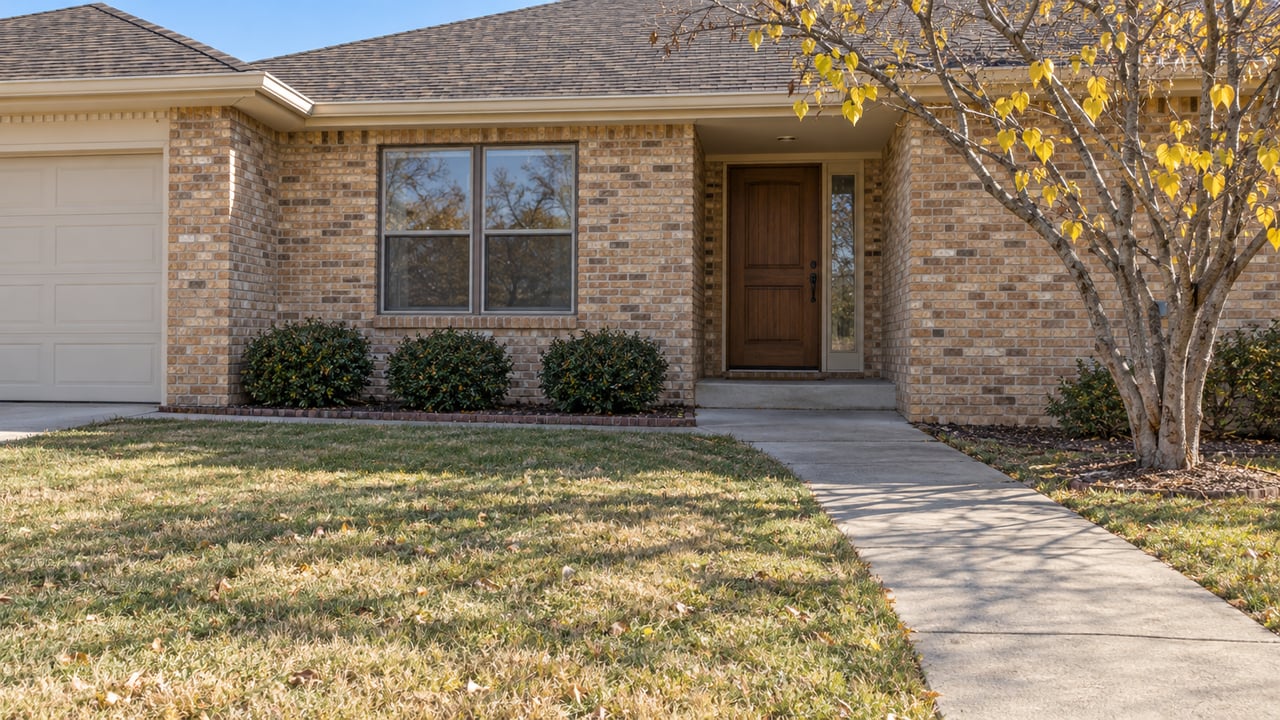
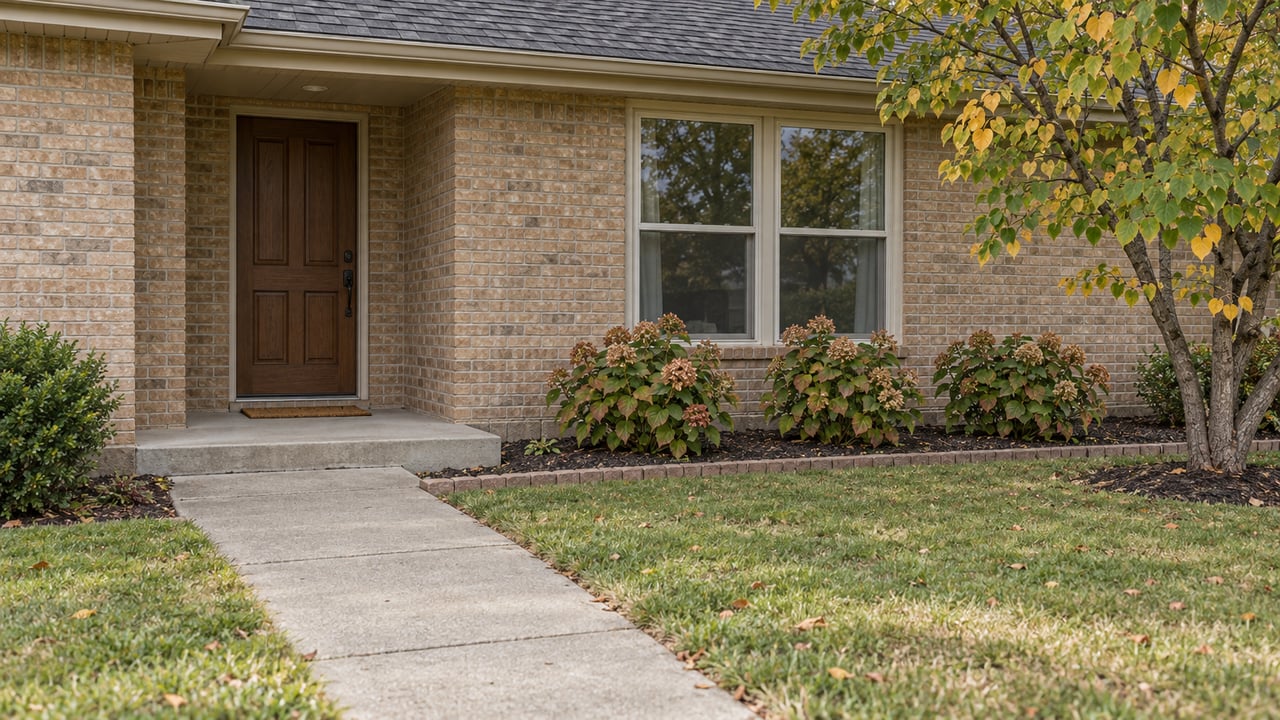
Start with what builders are actually putting up right now. Production builders like D.R. Horton and Lennar are running standard subdivisions with plans that, as of March 2026, commonly range from the upper $200s into the mid $300s. Lennar's floor plans in this corridor typically run 1,260 to 1,784 square feet, aimed squarely at first-time and move-up buyers who want a new roof and a warranty more than they want a custom layout.
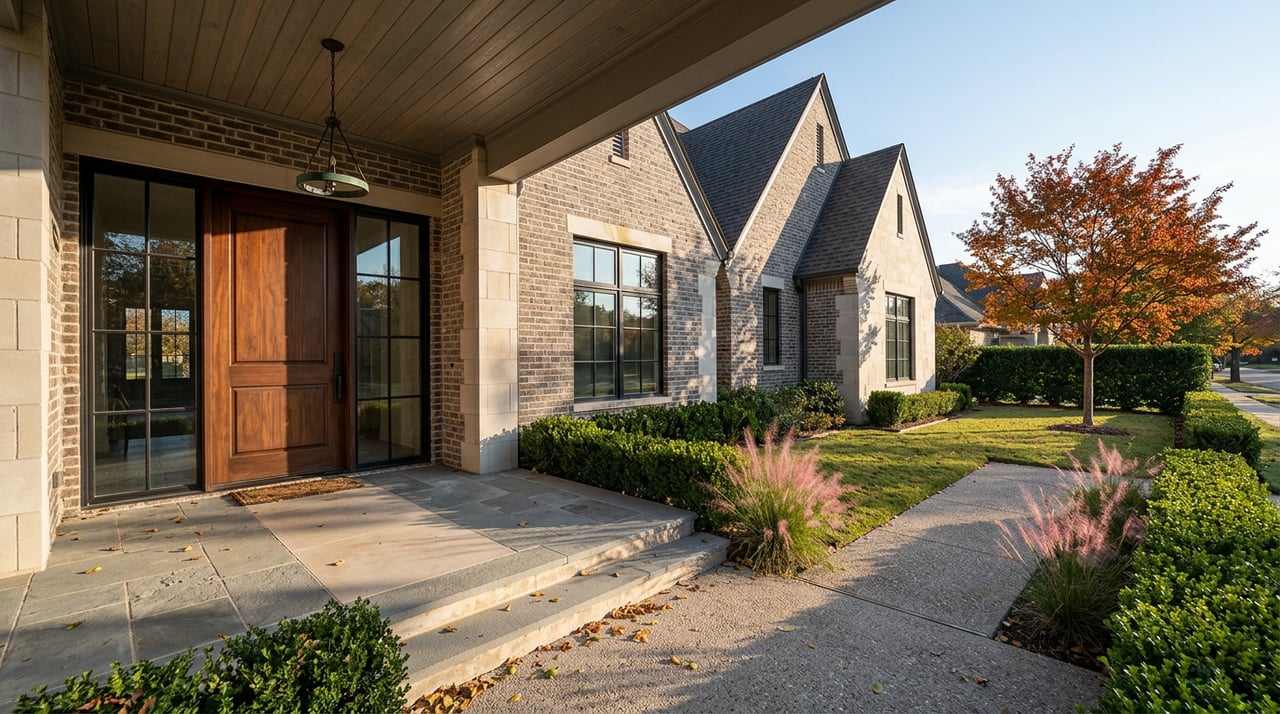
At the other end, Crystal Creek is marketed as a gated, higher-end community with 0.25 to 0.5-acre lots and custom or semi-custom builds. Community information as of March 2026 shows finished homes and new builds starting in the high $600s. Same city, same general drive time to I-40, entirely different product.
In between sit the established neighborhoods that don't show up in new-construction searches at all: Chisholm Crossing, Stone Mill, and Surrey Hills, where resale inventory reflects lot size and age of construction rather than a builder's current price sheet. Add in smaller infill communities like Siena (marketed around half-acre homesites) and Hidden Creek at Surrey Hills on the Piedmont-Yukon edge with greenbelt lots, and you have a city where "typical" is a word that stops meaning much.
| Market segment | Typical price band (March 2026) | Lot size | Example communities |
|---|---|---|---|
| Production / entry new construction | Upper $200s to mid $300s | Standard subdivision lots | D.R. Horton and Lennar plans, including Ashton Court |
| Established resale | Varies by age and lot | Standard to larger established lots | Chisholm Crossing, Stone Mill, Surrey Hills |
| Gated / semi-custom | High $600s and up | 0.25 to 0.5 acre | Crystal Creek, Siena (Block One) |
None of these figures are fixed. Builders adjust pricing and incentives often enough that you should confirm current numbers directly with the sales office before you build a budget around them. But the bands themselves explain something the median price alone never will.
Why The Number You See Online Keeps Moving
If you've searched "Yukon home prices" on more than one site, you've probably noticed the numbers don't agree, and it isn't because one site is wrong. Zillow's home value index put the average Yukon home value at $256,841 as of late June 2026, up 5.6% over the prior year. That's an average, not a median, and it's tracking estimated value across the entire existing housing stock, new and old.
Meanwhile, MLS-sourced market reporting for May 2026 put the median sold price at $269,932, with the median list price climbing to $319,900 that same month, a 1.6% increase from April. Sellers were receiving an average of 100% of asking price that month. That's a median of actual closed transactions, which behaves differently than an average of estimated values, and it moves month to month depending on which price tier happens to be closing.
Neither number is lying. They're measuring different slices of a market that genuinely contains a $300,000 starter home and a $650,000 gated custom build under the same city name. When your data source pulls more production-home closings in one month, the median drops. When a gated community has an active closing, it pulls the average up. A single "Yukon median" was never built to describe a market this split, which is exactly why relying on it to gauge whether a specific asking price is fair will lead you astray.
The practical takeaway: ask which segment a comparable sale actually came from before you use it to judge a listing's price. A $270,000 median sold price tells you almost nothing about whether a $340,000 semi-custom build on a quarter-acre lot is priced right, because they're not in the same comparable set.
The School Zoning Wrinkle Portals Don't Show
Here's the part that catches buyers off guard even after they've sorted out the price tiers. Yukon city limits do not line up with school district boundaries, and current active listings make this visible in a way portal search filters don't. A home advertised as sitting in "the popular Mustang School District" can carry a Yukon mailing address. Another new-construction community, Savannah Estates, is marketed specifically within the Piedmont School District while still located in Yukon. A third home, in the Kingsridge addition, is zoned to Yukon Public Schools. Three different districts, one city name on the envelope.
This isn't a quality judgment about any of the three districts. It's a logistics problem. If you're comparing two homes because they're both "in Yukon," you could be comparing two properties that will send your children to entirely different school systems, with different calendars, different enrollment processes, and different boundary lines that shift periodically as districts adjust for growth. Yukon Public Schools itself maintains an interactive zoning tool specifically because address-based assumptions fail often enough to need a dedicated lookup. Mustang Public Schools publishes its own boundary maps for the same reason.
Neither district guarantees its boundaries stay put. Mustang's district went through a boundary review process tied to state legislative changes affecting exit-year options for students in transition grades, a reminder that even a confirmed zone today is worth rechecking before a purchase closes, not just before you tour a home.
What To Actually Verify Before You Compare Two Listings
Before you treat two "Yukon" listings as apples to apples, run through this short list for each address:
- Confirm the school district by address, not by city name. Use the district's own zoning tool rather than assuming based on the listing's marketing copy, since copy can lag behind actual boundary updates.
- Identify which price tier the home belongs to. A production-builder spec home, an established resale, and a gated semi-custom lot are not substitutes for each other even at similar square footage, because lot size, HOA structure, and finish level diverge sharply.
- Check what the HOA dues actually cover. Most new communities carry dues in the roughly $250 to $450 per year range for common-area maintenance, but coverage varies enough between a production subdivision and a gated community that the number alone tells you little.
- Ask about the builder's warranty structure. Most builders in this market follow a standard 1-2-10 approach: one year on workmanship, two years on mechanical systems, and ten years of structural coverage, often backed by a third-party insurer. Confirm whether that coverage transfers if you're the second owner.
- Verify lot size and any deed restrictions directly, since "half-acre lot" advertising language in a semi-custom community and "half-acre lot" in an older resale neighborhood can mean different things once easements and setbacks are accounted for.
A house that looks like a straightforward comparison on a listing sheet often isn't one until you've checked all five of these against the actual address, not the city name attached to it.
Frequently Asked Questions
Does living in Yukon guarantee my kids attend Yukon Public Schools? No. Depending on the specific address and subdivision, a Yukon-addressed home can be zoned to Yukon Public Schools, Mustang Public Schools, or Piedmont Public Schools. Confirm zoning directly through the relevant district's boundary tool before assuming based on city name alone.
Why do Zillow, MLS reports, and other sites show different median prices for the same city? They're measuring different things. An average of estimated home values, a median of closed sales in a given month, and a median of current asking prices will all produce different numbers, especially in a market where inventory spans starter production homes and gated semi-custom builds.
Is a gated community like Crystal Creek part of the same market as a production subdivision nearby? They share a city name and sometimes a school district, but the price bands, lot sizes, and buyer pool are different enough that comparing them directly on price per square foot rarely produces a useful answer.
If you're weighing two "Yukon" addresses and the numbers aren't adding up the way you expected, that's usually a sign you're comparing across market segments rather than within one. The Ambassador Group Real Estate works this market address by address, not by city-wide average, and can walk you through which segment, which school zone, and which price band a specific listing actually belongs to. Get your free home valuation to see where your next move fits.
This article is general information, not legal, tax or financial advice. Consult a qualified professional about your situation.